Category Archives: Uncategorized

Mom loves me best

It’s hard not to be secretly pleased when your child chooses you over your spouse. I’m not talking about something big, like which one of you they’re going to live with after the divorce, I’m talking about little things, like being chosen to drive them and their friend to the movie theater. On the surface, it sounds like you’ve just won the booby prize, but it’s much more complex than that. When my daughter indicates a preference for me, the unspoken sub-text is that, in that particular case, I’m less of an embarrassment than her father. It may even be that she knows I’ll understand the emotions likely to be associated with a particular event and will be, therefore, less likely to provoke her. I know that sounds like a twist on damning with faint praise, but that in no way diminishes the impact on the chosen parent; secretly we are pleased.

In my slightly overcast worldview, all relationships have an element of competition to them. I’ve never believed that parents love all their children equally. For those of you whose hackles immediately go up, I’ll qualify that to say, I don’t believe that all parents love all their children equally. How can they? Children are people (hard as that may be to believe at times), and siblings can differ wildly from one another. I’m pretty sure that the real truth is that parents of multiple children live in a permanent catch-22; they have to say that they love all their children equally or all hell will break loose.

The interesting corollary to this is that all children are secretly convinced that their parents love them the most. Except for poor Tom Smothers who turned this rivalry on its head with the skit Mom Always Liked You Best off the Smothers Brothers album of the same name. Tom uses the accusation to make his brother, Dick, feel bad for him and is stunned when Dick finally says, “Sure, she liked me best. Want to know why?”

I know a couple of women whose husbands left in a blaze of ignominy. It was hard to drum up anything positive about them after their departures except for the fact that any man who could behave that badly was clearly better off gone. The real tragedy is that these women have children with these men, and they want the children to have good relationships with their fathers, so they sublimate their feelings and lie to the children about what really went down. Will they ever tell them the truth? Isn’t there an age at which it’s appropriate for the children to know that there was a villain in the breakup, and it was Daddy?

For the first bunch of years, we lie to children about all kinds of things. When faced with questions about death, we say, “Don’t worry honey, I’m not going to leave you.” When we don’t want to lie outright, obfuscation and redirection work well, but that gets harder and harder as they get older. It’s a relief when they’re old enough for, “We’re talking about you, not me.” And then comes the time that we find ourselves answering questions we wouldn’t have dreamed of discussing when they were younger. For most families, though, the lie that parents love all their children equally persists forever.

I only have one child. When I tell my daughter I love her best, I’m telling the whole truth, and nothing but the truth.

Relay for life

If you have kids in high school, or a family member with cancer, you may be familiar with the American Cancer Society fund raiser, Relay for Life. I was only vaguely aware of it because my nephew had been hitting me up for a donation for the past few years. Now I’m an expert because this year my daughter participated. I not only donated to the cause, I chaperoned the 6pm to midnight shift.

The event, you see, is an overnight affair. It takes place on the track behind the high school. Teams pay to participate, raise money, and then put up tents and canopies, bring food and sleeping bags, and spend the night circling the track, hanging with their friends and generally entertaining themselves as only teenagers can.

This year, it rained. And it rained, and it rained, and it rained. I was prepared, but miserable.

The first lap around the track was reserved for the cancer survivors who attended the event. Everyone else filled the field of turf in the center, clapping as the survivors passed by. I was surprised to see familiar faces walking the track. For the next lap, the survivors were joined by their caregivers, and again we watched and applauded. Then everyone else flowed onto the track and the laps began in earnest – for a while. The organizers intended to have at least two members of each team walking at all times, but in fact it doesn’t work that way. It doesn’t matter; the money’s been raised.

The kids were undeterred by the relentless downpour. They began the evening with their hoods up and their slickers zipped. Before long, however, they shed their outerwear, and many their shoes, deciding that it was easier to be wet than try to stay dry. Out came the soccer balls, the field hockey sticks and the volleyballs. The turf inside the track was full of bodies playing, slipping, sliding and laughing, while around the track, people walked, alone or in pairs or clusters.

For the first hour, I stood dutifully, holding my umbrella. Then I retired to what I hoped was a dry folding chair under our canopy. It was not, but with some creative draping I managed to keep my rear end relatively dry.

After cowering under the canopy for a time, I was coaxed out for the ‘luminaria’ service. Each team member held an inactivated glow stick. The organizer talked about how many people had been lost to cancer and how much we all wanted to cure it, etc., and then instructed the assembled to crack (thereby lighting) their glow sticks. Next, the emcee invited all those who had lost a parent to cancer to walk to a tall, translucent bag hanging on a frame, and drop in their glow stick.

I was shocked at how many kids flowed up to the bag. And how many more walked up for siblings, grandparents, other family members and friends. Teenagers all around were dabbing their eyes, hugging each other, and crying; gone for the moment was the need to act too cool for emotions. It was all laid bare, and it was terribly moving.

I hated being there in the rain. I couldn’t wait for midnight so I could go home. I wouldn’t have missed it for the world.

The black hole of health insurance

I just got back from the dentist where I had my bi-annual cleaning. Everything’s fine; apparently I do a good job with my “home care.” While I was there, though, I asked about a spot at the top of one of my front teeth that is slightly discolored. I don’t think you’d notice it during normal social interaction, but I do, every time I brush my teeth, or look in the mirror with my lips pulled back, which I do in order to stare at the discolored spot.

I asked the dentist about the spot and he said, “I can fix that.”

He went on to explain that it’s a spot that’s decalcified and isn’t medically problematical, although, if it got worse down the road, it could be. I didn’t need to do anything about it, but if I wanted to, no problem.

I’m not terribly vain, but come on, it’s one of my front teeth. It’s tempting to get it fixed. But wait, I asked, isn’t that cosmetic? Insurance wouldn’t pay for it, would they?

“Oh yes they will,” he said. “It’s all in the insurance code.” Then, with a wink, “It’s a filling.”

And there you have my dilemma. I can have this spot fixed if I knowingly participate in a mini insurance scam. What else can I call it?

I’m astonished and appalled at how little we consumers know about how insurance works. One of our household has been seeing a particular specialist every two weeks for months now. Each time, we write a check for the thirty dollar co-pay. We have never seen a statement from our insurance company about this doctor. When I asked the secretary how much an office visit was, she said it depended on a few factors, but ranged from $195 up. Really? There isn’t a set office visit fee? How much is this costing the insurance company?

In this particular instance, we don’t have a choice. We’ll keep seeing this doctor until they resolve the problem. But invisible charges? I’m much less comfortable with that than I am with the idea that the dentist can code a procedure as a filling so I can have something fixed that I wouldn’t pay for otherwise.

Maybe the insurance industry is rigged to be one big, cosmic, balancing act; my conscience might keep me from taking advantage of my dentist’s offer because I’m angry that the real cost of our health care is hidden from us. If that’s the case, then in the end, I’m the one who loses.

I once called a doctor’s billing office when the paperwork from the insurance company listed several procedures I didn’t recognize. They said, “There aren’t really codes for what you had, so we picked the closest ones.”

Really? So not only does the insurance company not know the truth, but now I have no record of what was done to me because believe me, when they say they picked the “closest” codes, they mean they picked things that look totally unrelated.

I know I can’t change any of the bizarre machinations of the health insurance industry. I do, however, need to make a decision about that little, discolored spot. Would it be wrong to have it done? It is one of my front teeth…

South Beach or bust

Recently, I wrote about whether or not women who were getting older were letting themselves go, or were victims of menopause. I opted to blame menopause. Now I feel the need to apologize, because even as I posted that piece, I knew I was kidding myself. I’ve been letting myself go. To the casual observer, I still look pretty good, but I know the truth; extra poundage has made itself at home, hanging out around my waist where it interferes with my self-esteem and zipping my jeans.

The last time I was at a crisis point with my weight I was turning forty. I needed a big change so I started at the top and cut my hair. The difference was remarkable. I loved it. And, it gave me incentive to bring the rest of me up to snuff. I’ve illustrated this for you below.

This time, almost thirteen years later, when I got my hair cut, the only person who noticed was my husband. Not the kick-start effect I was hoping for, but I persevered and dug in for my introduction to South Beach, the diet, not the vacation spot. I was a fan of Weight Watchers back in the day, but South Beach purports to help you drop eight to thirteen pounds in the first two weeks – from your stomach! How cool is that? Sadly, it turns out that this is not easy, particularly for someone like me who has frequent bouts of low blood sugar.

As you know, I am woefully under informed about all kinds of things. Remember the time I found out you can’t survive on a diet of jelly beans? In order to work the South Beach Diet I’ve had to learn a lot. For instance, did you know that everything you eat turns into sugar? (Those of us in the know call it glucose.) And your body needs glucose to survive (which may be why I was confused about the jelly bean thing, but let’s not beat a dead horse). I’ve also learned that some foods turn to sugar too quickly for the body to absorb them properly.

So what magic causes the weight loss during the first two weeks of South Beach? You’re not allowed to eat things that turn to sugar too quickly (us educated folk call them simple carbohydrates), like bread, pasta, and fruit. You know what happens when your body takes the time to squeeze glucose out of all those complex carbohydrates, like vegetables and eggs, you’re supposed to be eating? You become weak. You have to do the elliptical at less than half the usual speed. You need to rest three times while mowing the lawn when you normally zip through it without stopping. You lack the energy to move any faster than the zombies on The Walking Dead.

At the end of week one I was exhausted, but I’d lost three pounds and my jeans are easier to zip so I’m not disappointed, exactly, but I’m less optimistic that I can take off five more in week two. I committed to the two weeks though, so I’ll soldier on. If it turns out not to be the miracle diet I was hoping for, I’ll just go back to smaller portions and avoiding ice cream. Then I’ll return the swamp land I bought in Florida.

Uninvited, but very welcome, guests

One day it wasn’t there, the next it was; a bird’s nest resting on the wisteria vine that grows along the top of our farmer’s porch. At first I thought it was yard waste, blown there by the wind. But the next day it had grown larger. I had no idea that birds worked that fast so I wasn’t completely convinced it was a nest until a few days later when I opened the front door and a robin shot out of the mess of twigs in question and flew to a nearby tree.

Andrew and I were beyond excited. We were honored. This robin had chosen our house on which to make a home for her babies. This was personal. We immediately became protective, repeatedly cautioning each other to open the front door carefully so as not to spook her. We’d sit in the living room and crane our necks to look up at the nest. “I can see her! Come look,” we’d take turns telling each other. It didn’t take much urging. We were fascinated.

It took us all a few days to get used to each other. Each time we used the electric garage door opener she’d flee. Walking onto the porch sent her scrambling. But she calmed down after a week or so and now she’ll stay put when we drive home and put up the garage door. Sometimes, if we sneak out the front door quietly enough, she’ll ignore us.

One day, we saw a light blue egg balanced on the wisteria vine below the nest. We panicked. How would we get it back into the nest where it belonged? We figured touching it was out of the question. What if Mom ignored it once it had a human scent on it? Do birds even have a sense of smell?

The bigger problem was logistical. The nest was right above the stairs so getting close enough to reach into it would be tricky. If we were going to attempt a rescue, Andrew needed to see if he could climb up the porch railing. We determined that Mom wasn’t in residence and he hopped onto the railing while I held my breath. I wasn’t thrilled about risking his neck for the baby bird’s, but his inner mountain goat prevailed and he pulled himself up without incident.

“It’s not an egg,” he called down. “It’s just part of a shell. And there are babies in there!” He returned to earth and said, “I could just barely make out two little balls of fuzz.”

I was jealous, but since I have no mountain goat in me I was going to have to wait for the babies to show themselves. It didn’t take long. Mom had started to return from expeditions with worms dangling from her beak. Fortunately, my eyesight isn’t good enough to see all the details of the transaction, but one day I saw Mom on the side of the nest, bending down, and two little beaks pointed up in the air. It was true, I was a grandmother.

The nest and the birds have been wonderful compensation for the fact that this spring’s weather robbed us of our traditional wisteria blossoms. Below is what our vine looks like on a good year. This year, it seems that many of the buds froze and died. Andrew diagnosed that right around the time that the nest appeared. Even if we had all those blooms we might not notice them, transfixed as we are by our little family.

I have no idea how long it takes for baby robins to grow up and move out, nor do I know where Mom goes when she’s officially an empty nester, so I don’t know how long they’ll be in residence. I’m prepared to miss them all terribly when they’re gone, but maybe Mom will spread the word about what a great location it is and next year a new family will settle here. Maybe when they’re gone we’ll leave the nest right where it is and add a little sign that says, “Free Room to Let.”

A weighty matter

There’s a guy at my gym that I know from when our children were in elementary school. We worked on a bunch of fundraisers together over the years. He’s lost a lot of weight and when our paths cross at the gym, he ignores me. I imagine a thought bubble over his head that reads, “I’ve lost a lot of weight so I don’t recognize you anymore.”

Why does his weight loss aggravate my poor self-esteem?

At a party a few years back, a male friend said, “I’m glad to see you’re taking care of yourself. You look good.” I did a quick mental inventory of what I was wearing and tried to remember if I was having a good hair day. I hadn’t discovered the gym at that point, so I was pretty sure I wasn’t taking care of myself.

His comment niggled at me as I began to notice that many women of a certain age are decidedly heavy. However, since I wasn’t particularly taking care of myself, I decided that he had it backwards; they must be actively letting themselves go.

I’ve always been self-conscious about my weight; my sisters are skinny. But when I look at pictures of a younger me I don’t see an overweight girl, or teenager, or adult. I see a regular-sized person. And despite being obsessed with whether or not I was overweight, it wasn’t until after I had my daughter that I was bothered enough to embark on my one, and to-date only, dedicated life-style changing diet. I lost a lot of weight and managed to keep it off for almost ten years. And then it began to creep back.

The weight gain was slow, but steady. I started to worry. Was I finally letting myself go? How could that be? If anything, I had just started to take care of myself! I went to the gym at work an average of four days a week. I ate Weight Watchers meals for lunch. When I was laid off in 2009 the first thing I did was join my local gym. I was not going to let unemployment derail my exercise regime. I kept exercising and the weight kept creeping up.

Then came the hot flashes and I finally understood ─ menopause; the time when women’s bodies begin betraying us by messing with things we hold dear, like our internal thermostat. Without enough estrogen, the hair we’ve cherished gets thinner and hairs we don’t want start sprouting where they do us no good. Our emotions fly all over the place. And worst of all, our metabolism slows down. All of a sudden, we need to eat less and exercise more, just to stay even.

So here’s the news flash: women don’t let themselves go. While we’re happily enjoying midlife, the universe changes the rules. I’m told that many women find the post-menopausal stage of their lives fabulous. I hope that proves to be the case. Meanwhile, next time I see that ex-fatty in the gym and he ignores me, I might just punch him in the nose.

Old friends

My father-in-law once said, “The one thing you can’t make more of is old friends.” This was said in response to my pointing out that he was groaning about an impending visit from one of the same. The implications were that even though you may not have anything in common with a person any more, nor particularly look forward to seeing them, your shared history made them a forever friend. I’m not convinced.

When I complained about a friend who regularly made me sad and couldn’t commit to getting together, another friend said, “I tell my little girl that friends are nice to us and make us happy. Is she really your friend?” According to my father-in-law, the answer is yes.

And what about frenemies? According to Urbandictionary.com, the winning definition is, “An enemy disguised as a friend.” But I prefer this one (copied with all its grammatical warts):

The type of “friend” whose words or actions bring you down. (whether you realize it as intentional or not) The type of friend you ought to cut off but don’t cuz…they’re nice… good …you’ve had good times with them.

I had a very close friend in college; I’ll call her X. She was fiercely loyal to her friends and expected the same in return. The tiniest slight, perceived or otherwise, and she would cut you off and never look back. We remained close after she transferred to finish college in New York and through the years that followed.

During college, X. and I were thoroughly wrapped up in the underground rock and roll scene. It was the late seventies and punk rock ruled. Between The Rat in Kenmore Square in Boston, and CBGB’s in the Bowery in New York, it’s a wonder that either of us managed to graduate. But graduate we did, and then began the laborious process of growing up, building careers, and going to bed before 3am.

She came to visit me after I bought my first house. I was thirty, a responsible grown-up with a job and a mortgage. After admiring my home and catching up, she excused herself to go to the bathroom. When she’d been gone for a while, I tapped on the bathroom door and called, “X? Are you okay?”

She opened the door and I saw works on the bathroom sink. She had just finished shooting up in my bathroom.

I don’t remember the rest of that day, but sometime later X. sent me a card asking why she hadn’t heard from me in a while. I responded honestly with a letter about how sad I was that she was indulging in self-destructive behaviors, and how I thought she needed help. I told her I missed her, and would welcome her back whenever she was ready. She must have considered that disloyal because I never heard from her again.

I think about X from time to time. Sometimes I miss her. She was nice to me and made me happy. By one of the definitions above, that made her my friend, but was she also a frenemy? Her behavior wasn’t hurting me, although it did bring me down. At my age, someone I met in college constitutes an old friend, but if they stopped speaking to me along the way they probably don’t qualify.

I’m going to work on a word for someone you’re fond of that probably doesn’t care if you’re still alive. Suggestions welcome.

Let the good times roll – in a cab

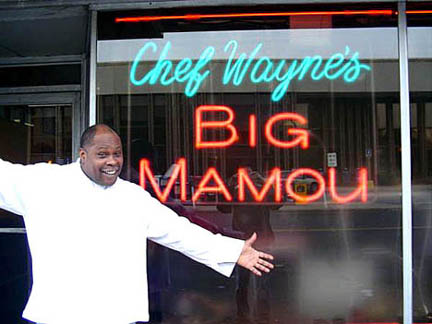
Chef Wayne’s Big Mamou is a Cajun restaurant in Springfield, MA. When my friends and I asked for walking directions from the Sheraton Hotel, the concierge expressed surprise. We interpreted his response as skepticism that three women would rather walk than take a cab so we persevered, got the directions (which were quite straightforward), and set out happily, looking forward to a drink and a nice dinner. It wasn’t long before the pretty retail facades and business addresses gave way to empty lots and corner bars, but it was still light out and we were enjoying each other’s company so it was all good. Then we walked past the bus station and turned right. Now we could see the YMCA down the street. We began to understand why the concierge thought we might want a cab.

We knew the restaurant didn’t take reservations. We didn’t know they didn’t have a liquor license. There didn’t seem to be any other choices in the neighborhood so we decided to stay and wait for a table. We joined a line of people who were leaning against the wall. The guy in front of us was wearing a Columbia Teacher’s College baseball cap. V. went to Columbia for grad school. She made friends with him and his party while D. and I entertained each other.

At one point, she turned back to us and said, “Tim thinks we should take a cab back to the hotel.” She also told us what he recommended for dinner. Apparently he was a regular, as, it turned out, were most of the other diners.

When we were seated, perusing the menu, I noticed that on the floor at the next table was a cardboard box with an untouched six-pack of Mikes Classic Margarita. The table was scattered with crumpled napkins and empty glasses. It was clear that they were finished and getting ready to pay the bill. Before I could lose my nerve I leaned over and said, “Excuse me, if you guys are done, would you consider selling me that six-pack?” Even for me that felt a little ballsy, but I was never going to see these people again so I figured what the hell. The guy closest to the six-pack picked it up and brought it to our table.

“Take it,” he said. “It’s yours.”

Now I was making friends. Our benefactor was eager to share tourist tips with us. He was bullish on a local bar, even recommended a particular drink, but urged us to take a cab. Et tu, Margarita Guy? Why did everyone want us to take a cab?

Another guy at his table joined the conversation. He told me that he and his wife had just moved back to South Hadley because his wife had gotten a job as the Director of Communications for one of the area colleges. When I told him we were all children’s book writers, in town for a conference, he mentioned that she had a blog, The Musing Mama. I visited her blog and was surprised to find that she’s a good writer. I read a few posts and bookmarked the site. I’m now mulling over a new way to promote my blog, a six-pack for each new subscriber. It might work…

Back at Chef Wayne’s, when Tim was getting ready to leave, he and his friend, Louis, came to our table to say good-bye. Tim reminded us to take a cab.

I said, “What’s with the cab thing? It’s not that long a walk.”

He replied, “This is Springfield. Do you know what the murder rate is?”

Actually, no, I thought.

His friend nodded and said, “I’m a court officer. I hear a lot. Take a cab.”

When we were done with dinner, we gave the three remaining margaritas to a group that had just been seated and called a cab.

At Chef Wayne’s Big Mamou the food is delicious, the atmosphere is funky, and the people are great. Next time you’re in Springfield, check it out. But BYOB ─ and take a cab.

Storytelling from The Moth

The Moth, True Stories Told Live, is a radio show that airs on NPR. The story tellers are real people with interesting stories to tell. They may also be actors or writers, but they’re just as likely to be ex-cons, teachers, mechanics and dog-walkers. They tell real stories about themselves, live on stage without notes or other crutches. That is not to say that these are extemporaneous performances, far from it. The stories have beginnings and middles and ends. They are polished and practiced and committed to memory. But they don’t sound like theatrical pieces; they sound like stories.

The main stage for The Moth is in New York, but the show travels and recently came to the Somerville Theater. Andrew was online during the teensy, tiny window of opportunity for getting tickets and succeeded. It was an incredible evening. We had a ball. We heard five storytellers that night and only one would I characterize as a performer by trade. Of the others, one was a leader of the Human Genome Project who still teaches biology at MIT, one was an ex-DA turned funeral director, and one was the author of a memoir called Jarhead. The theme of the evening was “Shapeshifters: Stories of Transformation.”

I don’t know how many of The Moth performers are featured more than once. Since the stories are all true it’s hard to imagine anyone having more than one. However, the ex-DA’s story was about being shocked out of his drug habit after an attempted armed robbery in his law office. Since his bio tells us he’s now a funeral director, I’m betting he has another story or two in him.

I want to tell my stories to a big, appreciative audience. Reading my zip code story, 02476, to a bar full of people at a Literary Lounge evening was a major rush. I was high for days. I would love to tell a story at a Moth open mic night. I have lots of stories. I write a piece for you every week, don’t I? And I mine my own life to come up with them! It should be easy, right? Maybe not. On The Moth’s website is a page called Storytelling Tips. One of them is:

No essays: Your eloquent musings are beautiful and look pretty on the page but unless you can make them gripping and set up stakes, they won’t work on stage.

Damn. But then I read more and had a small epiphany – it was all good advice for writers as well as storytellers. Here are a few of their other tips: have some stakes, start in the action, steer clear of meandering endings, no standup routines, no rants. Lest you think novelists don’t employ stand up routines and rants, let me assure you they try to. I removed a small rant from my work-in-progress just the other day.

And talk about rants, have I ever told you about the time my car broke down on the highway during a rainstorm? Well it was late and… You know what? I think I’ll keep that off my blog. It might make a good story for The Moth.

02476

I wrote this for a contest for Zip Code stories that Radio Boston co-sponsors with The Drum Literary Magazine. I read it during the open mic portion of an evening that celebrated the February stories. The winner was my friend, Lisa Rogers. You can hear a snippet of the evening, and a few of my sentences, here.

02476

I moved to Arlington because I wanted a house that was close to the city, in a town I could afford. I didn’t check out the school system or compare MCAS scores to surrounding towns. I didn’t inquire about the town’s tax base, or whether or not they were responsible for plowing sidewalks. When I moved in I was single. I didn’t get the local paper and I didn’t vote in local elections. I only knew my immediate neighbors by sight, and I couldn’t name a single person on the Board of Selectman.

About a year after I bought my house, I met a man. He moved in, we got married and had a baby. I started pushing the baby carriage around the neighborhood. I met other people pushing strollers, walking dogs, working in their gardens.

I subscribed to the local paper, and joined a town email list. I discovered that while I wasn’t paying attention, Arlington had become sought after by people being priced out of Lexington and Cambridge. I volunteered for a “Vote Yes for the Override” campaign. More time passed. I joined the Board of Directors of our pre-school, and then moved on to the PTO at my daughter’s elementary school. I went to School Committee meetings and worked on another override campaign.

After vigorous debate, liquor stores came to town, and restaurants began to serve alcohol. Arlington became a dining destination. We rebuilt several of our elementary schools. My work on the overrides helped make that happen. Recently, several small, boutique shops have moved into town. I worry about whether they’ll be able to make a go of it in our still shaky economy, but if everyone shops locally, they should be okay.

My daughter takes a town bus down Mass Ave to the high school and my husband takes the bus to work. When I have meetings in Boston, I catch a bus around the corner from my house that takes me to Alewife where I can hop on the T. Our Subaru is over a year old and it has less than four thousand miles on it. I applaud the plan to make Mass Ave more bicycle-friendly, and intend to lobby the MBTA to preserve our bus routes.

I’ve lived in Arlington for over twenty years now and I’m fully invested in it. My roots have grown deep. Today, when I meet someone who is thinking about moving to Arlington, I tell them about the bike path, the restaurants, our schools and yes, our MCAS scores. I explain that we don’t have much industry in town so our tax base is limited, but that our population has a very high percentage of people who work in non-profit sectors so we have a lot of heart. I tell them that Arlington is a wonderful place to raise a child and that if they move to town, I guarantee, it will grow on them.